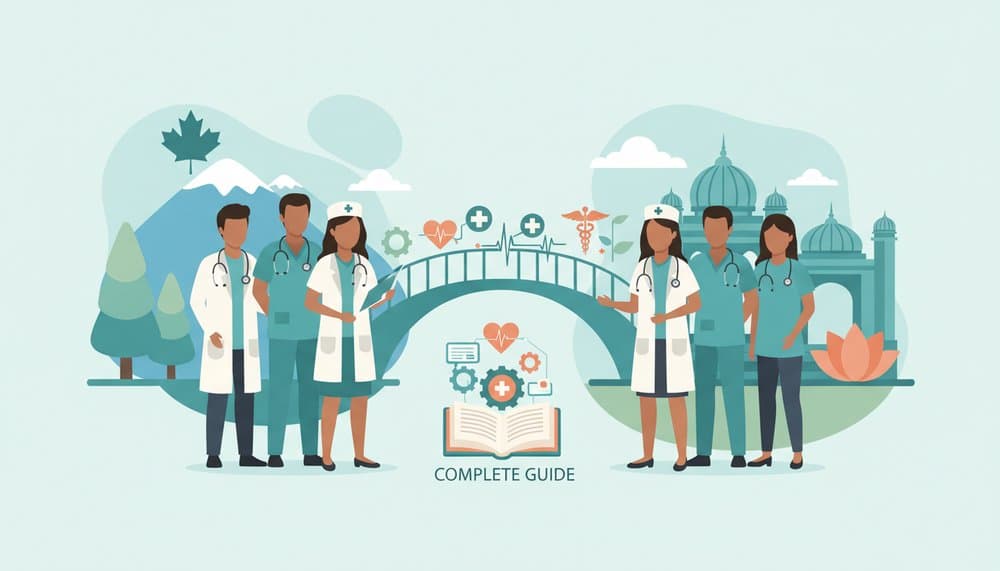
Healthcare for Indians in Canada: Complete Guide
Medically reviewed by Dr. Nikhil Singh, Anaesthesia, MBBS, MD
Last reviewed: 24 Aug 2026 · How we review health content
A Comprehensive Healthcare Guide for Indians in Canada
Navigating a new country's healthcare system can be a daunting task. For Indians moving to Canada, understanding how to access medical services is a top priority for ensuring a smooth and healthy settlement. This guide provides a comprehensive overview of the Canadian healthcare system, from obtaining provincial health insurance to finding a family doctor and understanding the costs involved. It also explores healthcare for permanent residents and the growing trend of medical tourism.
Understanding the Canadian Healthcare System: A Primer
Canada has a universal, publicly funded healthcare system often referred to as Medicare. This system is not a single national plan but rather a network of 13 provincial and territorial health insurance plans. Funded by taxes, these plans are designed to ensure that all eligible residents have reasonable access to medically necessary hospital and physician services without paying out-of-pocket.
However, it's crucial to understand that "universal" does not mean all-encompassing. Each province and territory determines what is considered medically necessary and what services are covered. Generally, services like visits to a family doctor, specialists, hospital stays, and diagnostic tests are included.
What's Not Covered by Public Health Insurance?
A common misconception is that all healthcare in Canada is free. Most provincial plans do not cover:
- Prescription drugs taken outside of a hospital setting.
- Routine dental care, such as check-ups, cleanings, and fillings.
- Routine vision care, including eye exams and prescription glasses or contact lenses.
- Paramedical services like physiotherapy, chiropractic care, and massage therapy (unless provided in a hospital).
- Ambulance services, which often have a co-payment fee.
- Private or semi-private hospital rooms, unless medically prescribed.
To cover these expenses, a majority of Canadians rely on supplementary private health insurance, often provided through their employers or purchased individually.
Provincial Health Insurance: Your Key to Access
Upon arriving in Canada, one of your first steps should be to apply for your provincial or territorial health card. This card is your proof of eligibility for publicly funded healthcare services. The application process and eligibility requirements vary by province.
Eligibility and the Waiting Period
Permanent residents and some temporary residents, such as those with a valid work permit, are generally eligible for public health insurance. However, a significant factor for newcomers is the waiting period. Many provinces require a waiting period of up to three months before your coverage becomes active.
Here's a look at the waiting periods in some of Canada's most populous provinces:
- Ontario (OHIP): As of recent changes, there is no longer a waiting period for the Ontario Health Insurance Plan (OHIP). Eligible newcomers can apply for coverage immediately upon arrival.
- British Columbia (MSP): The Medical Services Plan (MSP) has a waiting period that includes the remainder of the month you arrive plus two full months. This can total up to 90 days.
- Alberta (AHCIP): Alberta is an exception, with no waiting period for its Alberta Health Care Insurance Plan (AHCIP). Coverage can begin upon establishing residency.
- Quebec (RAMQ): Quebec has a waiting period of up to three months for its health insurance plan.
During any waiting period, it is highly recommended to have private health insurance to cover any unexpected medical emergencies.
Applying for Your Health Card
To apply for a provincial health card, you will typically need to visit a designated service centre in person. You will be required to provide original documents that prove your:
- Immigration status (e.g., Permanent Resident Card, work permit).
- Residency in the province (e.g., a lease agreement or utility bill).
- Identity (e.g., passport).
Each family member, including children, needs their own health card.
Finding a Doctor in Your New Home
Having a regular family doctor, also known as a General Practitioner (GP), is central to managing your health in Canada. They are your first point of contact for non-urgent medical issues, preventative care, and referrals to specialists.
The Challenge of Finding a Family Doctor
Many newcomers find it challenging to find a family doctor accepting new patients, as there can be shortages in certain areas. Here are several strategies to aid your search:
- Provincial Registries: Many provinces have a centralized system to help match patients with doctors. For example, Ontario has Health Care Connect.
- Community Health Centres (CHCs): These centres provide primary care and are often a good option for newcomers, though they may have specific geographic service areas.
- Ask for Referrals: Your network of friends, colleagues, and local settlement agencies can be valuable sources of information.
- Online Directories: Websites and tools, such as those provided by provincial medical associations, can list doctors in your area.
What to Do if You Can't Find a Doctor Immediately
If you need medical attention and do not have a family doctor, you have other options:
- Walk-in Clinics: These clinics provide episodic care for non-life-threatening issues without an appointment. Be aware that if you are in a waiting period for your health card, you will have to pay for the visit out-of-pocket.
- Urgent Care Centres: For issues that are not life-threatening but cannot wait for a regular doctor's appointment, these centres are an alternative to a hospital emergency room.
- Telehealth Services: Many provinces offer a free and confidential phone line (such as Health811 in Ontario) to get health advice from a registered nurse 24/7.
For any medical emergency, you should go to the nearest hospital's emergency department. Emergency services are provided to everyone, regardless of immigration status, though fees may apply if you do not have a valid health card.
Healthcare for Permanent Residents
As a permanent resident, you are eligible for the same public healthcare coverage as a Canadian citizen. The key is to apply for your provincial health card as soon as you arrive and secure private insurance for any applicable waiting period. Your coverage extends to your spouse and dependent children as well.
It is important to maintain your residency in the province to remain eligible. For instance, to qualify for OHIP in Ontario, you must be physically present in the province for 153 days in any 12-month period.
Medical Tourism: A Tale of Two Countries
Medical tourism is a growing phenomenon, with patients traveling across borders for medical care. This trend flows in both directions between Canada and India, driven by different factors.
Canadians Seeking Treatment in India
Some Canadians, including those of Indian origin, travel to India for medical procedures. The primary motivations are:
- Cost Savings: Procedures in India can cost 50-80% less than in Canada, particularly for elective surgeries, dental work, and fertility treatments not covered by provincial health plans. For example, a hip replacement that might cost $20,000-$40,000 CAD in Canada could be available for $10,000-$18,000 CAD in India.
- Avoiding Long Wait Times: Canada's healthcare system can have long wait times for specialist consultations and non-urgent surgeries. India offers quicker access to these procedures.
- Access to Specialized Care: India has internationally accredited hospitals with highly experienced specialists and advanced medical technology.
Indians Seeking Treatment in Canada
While less common due to the high costs for non-residents, some individuals from India may seek highly specialized medical treatments available in Canada. However, without eligibility for public healthcare, the costs would be entirely out-of-pocket and substantial.
When to Seek Treatment: A Quick Guide
- For Emergencies: Go to the nearest hospital emergency room or call 911 for an ambulance. This includes situations like chest pain, difficulty breathing, serious injuries, or severe bleeding.
- For Non-Urgent Care: If you have a family doctor, make an appointment. If not, visit a walk-in clinic. This is for issues like colds, minor infections, or prescription refills.
- For Health Advice: Use your province's telehealth service to speak with a nurse for guidance on non-urgent health concerns.
Resources and Next Steps
To help you navigate the system, here is a preview of essential resources. You should visit the official websites for the most current information.
- Provincial Health Ministries: Each province has a Ministry of Health website with detailed information on its health insurance plan, eligibility, and how to apply. Examples include the Ontario Ministry of Health for OHIP and the British Columbia Ministry of Health for MSP.
- Finding a Doctor: Look for your province's "College of Physicians and Surgeons" directory or programs like Ontario's "Health Care Connect."
- Newcomer Services: Settlement agencies in your city are an excellent resource for guidance on all aspects of settling in Canada, including healthcare.
- Private Health Insurance Providers: Companies like Manulife, Sun Life, and Blue Cross offer private health insurance plans for newcomers and for services not covered by public insurance.
By understanding the structure of the Canadian healthcare system and taking proactive steps to secure your health coverage, you can ensure you and your family have access to the care you need as you begin your new life in Canada.

Written by Dr. Nikhil Singh · Anaesthesia, MBBS, MD
Private hospitals in Gorakhpur on Zospital
Prefer a private option? These hospitals in Gorakhpur list their doctors and take bookings.
- Aastha Hospital & IVF Center, Gorakhpur
- Shankar Eye and Maternity Clinic- Best eye hospital | Best eye surgeon | Eye and Maternity clinic in Gorakhpur
- Trimurti Hospital - Dr. Sanjeev kumar Singh
Related Articles
Healthcare for Indians in UK: Complete Guide
This guide helps Indian residents understand the UK's dual healthcare system, covering the NHS and private options.

Healthcare for Indians in USA: Complete Guide
Understand the challenges of US healthcare for Indians. This guide covers the private, insurance-reliant system, its high costs, and returning to India for

Healthcare for Indians in Middle East (GCC): Complete Guide
Indian expatriates in Middle East GCC countries can understand local healthcare systems, insurance, and medical facilities.

Written by Dr. Nikhil Singh
Anaesthesia, MBBS, MD
Last reviewed: 24 August 2026
Medical Disclaimer
The content provided on Zospital is for general informational and educational purposes only. It is not intended as a substitute for professional medical advice, diagnosis, or treatment. Always seek the advice of your physician or other qualified healthcare provider with any questions you may have regarding a medical condition. Never disregard professional medical advice or delay in seeking it because of something you have read on this website. If you think you may have a medical emergency, call your doctor or emergency services immediately.
Are you a doctor or run a clinic or hospital?
Patients across India are searching Zospital right now. Get a free profile with reviews, timings and direct WhatsApp bookings.