Uterine Fibroids: Symptoms and Treatment Options
More in Gynecologist Guides
- First Pregnancy Anxiety: What to Expect at Each Stage
- Vaginal Discharge: When Is It Normal and When to See a Doctor?
- Postpartum Depression: Signs New Mothers Shouldn't Ignore
- Common Breastfeeding Problems in the First Weeks & Solutions
- Urine Leak After Delivery: Why It Happens & What Helps
- HPV Vaccine & Cervical Cancer: A Practical Guide
Medically reviewed by Dr Aparna Khandelia, Obs & Gynae Surgeon, MBBS, MS
Last reviewed: 19 Sept 2026 · How we review health content
Did you know that by some estimates, nearly 1 in 4 women in India may have uterine fibroids during their childbearing years? Yet, so many of us suffer in silence, thinking that extremely heavy, painful periods or constant pelvic pressure is just 'a woman's lot in life'. It isn't.
It's completely normal to feel worried or confused when you hear the term 'fibroid' or 'rasoli'. You might wonder if it's cancer, if you'll need surgery, or how it will affect your life. Let's clear the air and walk through what this common condition really means for you.
Uterine fibroids are simply non-cancerous muscular growths that develop in or on the wall of the uterus (bachhedani). They are not cancer. Thinking about them can be scary, but having the right information is the first step toward feeling in control again.
Listening to Your Body: Common Fibroid Symptoms
Many people with fibroids have no symptoms at all. For others, the signs can significantly disrupt daily life, from work to family duties. It's easy to dismiss these issues, especially in a busy joint family household where your health might take a backseat. But your body is trying to tell you something.
A 38-year-old marketing executive from Delhi recently shared her story. For years, she planned her life around her periods (masik dharm/mahwari). She avoided wearing light-colored clothes and often had to cancel plans because of heavy bleeding and crippling cramps. She assumed this was just her 'normal'. It was only when she started feeling dizzy and exhausted all the time—due to anemia from the blood loss—that she finally saw a doctor and got diagnosed.
Many people in your situation wonder if their symptoms are 'bad enough' to see a doctor. If any of the following are affecting your quality of life, it's time to get checked:
- Very heavy or prolonged bleeding during your periods.
- Pelvic pain or a feeling of 'fullness' or pressure in your lower stomach.
- Needing to urinate frequently, or feeling like you can't fully empty your bladder.
- Pain in your lower back or down your legs.
- Discomfort or pain during physical intimacy.
- Constipation or what many call 'gas trouble' that doesn't seem to go away.
What Causes Fibroids, Anyway?
The honest answer is that doctors don't know the exact single cause. It's frustrating not to have a simple 'why', but we do know what contributes to their growth.
Hormones play a big role. The female hormones estrogen and progesterone, which regulate your menstrual cycle, also seem to promote the growth of fibroids. This is why they often grow during pregnancy when hormone levels are high and tend to shrink after menopause.
Genetics are also a factor. If your mother or sister had fibroids, you have a higher chance of developing them too. Other things like starting your period at a very young age, obesity, and a diet high in red meat and low in green vegetables might also increase the risk.
Experiencing this? Dr Aparna Khandelia (MBBS, MS (Obstetrics & Gynaecology)) treats IVF treatment, normal and cesarean deliveries, high-risk pregnancy management, prenatal and postnatal care, family planning counseling, irregular periods and PCOS treatment, pregnancy ultrasounds at ERA's Lucknow Medical College & Hospital and B Hope Hospital in Lucknow. Book an appointment.
Your First Doctor's Visit: What to Expect
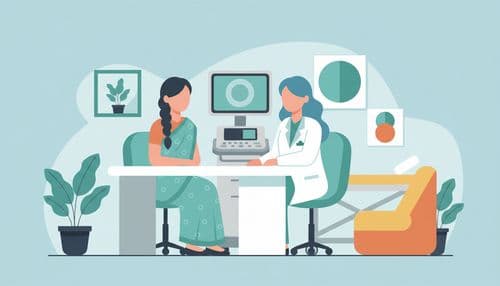
Walking into a gynaecologist's office can feel intimidating, but you're taking a positive step. Your doctor's goal is to understand your symptoms and find a solution that works for you. They've had this conversation with many, many patients before.
First, the doctor will ask you detailed questions about your menstrual cycle, the heaviness of your flow, the type of pain you experience, and your family history. Then, they will likely perform a gentle internal pelvic exam to feel for any abnormalities in the shape or size of your uterus.
To confirm the diagnosis, the most common next step is an ultrasound, often called sonography. It's a painless scan that uses sound waves to create a picture of your uterus and can clearly show the location and size of any fibroids. This gives your doctor the information they need to discuss your options.
A Range of Treatment Choices
Finding out you have fibroids doesn't automatically mean you need surgery. Treatment is highly personalized and depends on your symptoms, the fibroid size and location, your age, and whether you hope to have children in the future. Sometimes, the right approach is no immediate treatment at all.
For mild symptoms, a doctor might suggest 'watchful waiting'. This means monitoring the fibroids with regular check-ups to see if they grow or if your symptoms worsen. They may also recommend medications like painkillers or hormonal pills and injections to help manage heavy bleeding and pain.
For more significant symptoms, there are several procedures. A myomectomy is a surgery that removes the fibroids while leaving your uterus intact—an important option for those who wish to get pregnant later. Other minimally invasive techniques can shrink fibroids by cutting off their blood supply. In severe cases, particularly when a person is not planning more children, a hysterectomy (removal of the uterus) might be considered as a definitive way to resolve symptoms. It's essential to have an open conversation with a qualified healthcare provider to understand the pros and cons of each path.
Frequently Asked Questions
Can uterine fibroids turn into cancer?
This is a very common fear, but it's extremely rare for a fibroid to be cancerous. The chance of a fibroid being a cancerous sarcoma is less than 1 in 1000. For the vast majority of people, fibroids are benign (non-cancerous) growths.
Do I have to get surgery for my fibroids?
Not necessarily. Many people with fibroids never need surgery. If you have no symptoms or your symptoms are mild and can be managed with medication, your doctor may just recommend monitoring them. Surgery is generally reserved for when symptoms are severe and affect your quality of life.
Can I still get pregnant if I have fibroids?
Yes, many people with fibroids get pregnant and have healthy babies. However, depending on their size and location, some fibroids can interfere with fertility or increase the risk of complications during pregnancy (garbhavastha). It's a good idea to discuss your pregnancy plans with your doctor.
Can changing my diet or lifestyle help with fibroids?
While there's no diet that is proven to shrink or eliminate fibroids, certain lifestyle changes can help manage symptoms and may reduce your risk. Maintaining a healthy weight and eating a balanced diet rich in fruits, vegetables, and whole grains can help with hormone regulation and overall health. Reducing red meat and processed foods is also often suggested.
Medical Disclaimer
The information provided in this article is for general informational and educational purposes only. It is not intended as a substitute for professional medical advice, diagnosis, or treatment. Always seek the advice of your physician or other qualified healthcare provider with any questions you may have regarding a medical condition. Never disregard professional medical advice or delay in seeking it because of something you have read in this article.
Related reading
Top Gynecologist doctors in Lucknow on Zospital
Explore professional profiles and available appointment options.
- Book appointment

Dr. Megha Sarakshi Chadha
GynecologistPatnaVerified•4.9 - Book appointment

Dr. Jaya Singh
GynecologistDehradunVerified - Book appointment
Dr. Vidya Shetty
GynecologistThaneVerified•5 - Book appointment

Dr. Richa Gangwar
GynecologistLucknowVerified•4.9 - Book appointment

Dr. Anjana Jain
GynecologistLucknow4.9 - Book appointment

Dr. Peeyusha Wadhwani Rajani
GynecologistLucknow4.9
Have More Questions?
Find quick answers to common questions about our services, appointments, and patient care.
This is a very common fear, but it's extremely rare for a fibroid to be cancerous. The chance of a fibroid being a cancerous sarcoma is less than 1 in 1000. For the vast majority of people, fibroids are benign (non-cancerous) growths.
Not necessarily. Many people with fibroids never need surgery. If you have no symptoms or your symptoms are mild and can be managed with medication, your doctor may just recommend monitoring them. Surgery is generally reserved for when symptoms are severe and affect your quality of life.
Yes, many people with fibroids get pregnant and have healthy babies. However, depending on their size and location, some fibroids can interfere with fertility or increase the risk of complications during pregnancy (garbhavastha). It's a good idea to discuss your pregnancy plans with your doctor.
While there's no diet that is proven to shrink or eliminate fibroids, certain lifestyle changes can help manage symptoms and may reduce your risk. Maintaining a healthy weight and eating a balanced diet rich in fruits, vegetables, and whole grains can help with hormone regulation and overall health. Reducing red meat and processed foods is also often suggested.

Written by Dr Aparna Khandelia · Obs & Gynae Surgeon, MBBS, MS
Private hospitals in Lucknow on Zospital
Prefer a private option? These hospitals in Lucknow list their doctors and take bookings.
- Paarth Eye Hospital & Retina Centre
- Urmila Devi Memorial Hospital- Child Specialist Hospital in Lucknow | Pediatrician hospital
- SPARSH CHILDREN'S HOSPITAL & VACCINATION CENTER | Child Hospital in Raebareli Road Lucknow | Dr. Akhilesh Pandey |
Related Articles
First Pregnancy Anxiety: What to Expect at Each Stage
If you're pregnant for the first time, a mix of excitement and anxiety is completely normal. Here’s a look at the common worries you might face at each stage and how to manage them.
Vaginal Discharge: When Is It Normal and When to See a Doctor?
Many women worry about vaginal discharge, or 'safed pani'. An experienced doctor explains what's normal throughout your cycle and what symptoms signal it's time to seek medical advice.
Postpartum Depression: Signs New Mothers Shouldn't Ignore
Postpartum depression affects many new mothers in India. Understand the difference between 'baby blues' and PPD, and recognize the signs that mean it's time to talk to a doctor.

Written by Dr Aparna Khandelia
Obs & Gynae Surgeon, MBBS, MS
Last reviewed: 19 September 2026
Medical Disclaimer
The content provided on Zospital is for general informational and educational purposes only. It is not intended as a substitute for professional medical advice, diagnosis, or treatment. Always seek the advice of your physician or other qualified healthcare provider with any questions you may have regarding a medical condition. Never disregard professional medical advice or delay in seeking it because of something you have read on this website. If you think you may have a medical emergency, call your doctor or emergency services immediately.
Are you a doctor or run a clinic or hospital?
Patients across India are searching Zospital right now. Get a free profile with reviews, timings and direct WhatsApp bookings.