Lower Back Pain: A Guide for When to Seek Help in Lucknow
What to check next
Why Does Shoulder Pain Increase at Night? Common Causes and When to Seek Medical Help
Related guide
Kamar Dard Ya Slip Disc? Spine Specialist in Lucknow — Kab Surgery Zaroori Hai
Related guide
Managing Parents' Hospital Care in India from Abroad
Managing your parents’ hospital care in India from overseas
Medically reviewed by Dr. Abhinav Srivastava, Orthopaedic Surgeon, MBBS, MS
Last reviewed: 19 Sept 2026 · How we review health content
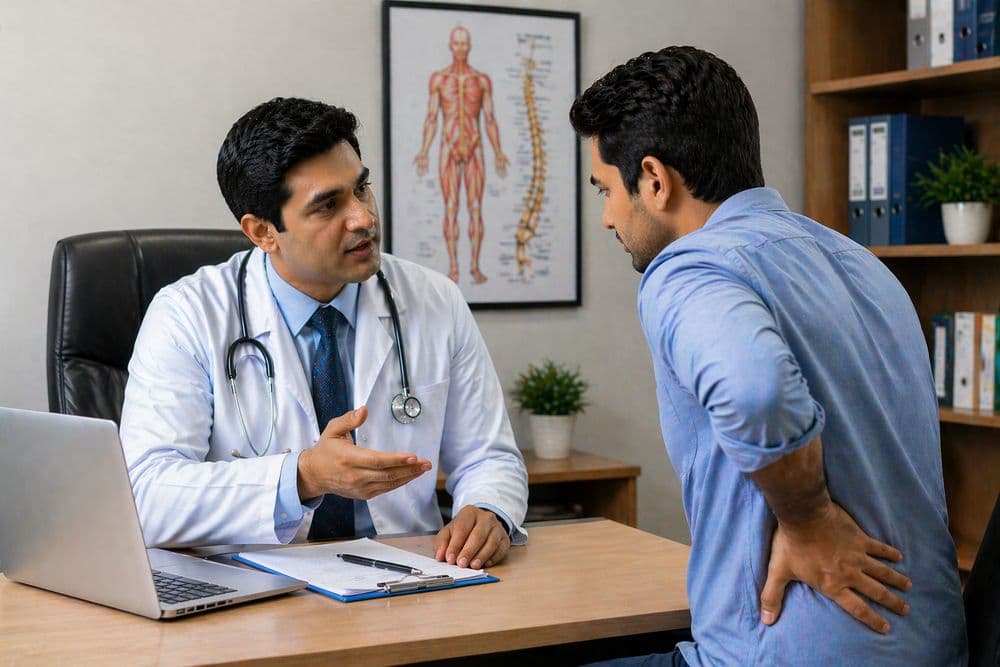
That first sharp twinge in your lower back, or the dull ache that just won't go away. It’s a feeling many of us know too well. The first thought that often flashes through the mind is, 'Is this just tiredness, or is it something serious?' The fear of a slipped disc or a chronic spine problem can be worrying, making you hesitate before you even bend down to pick something up.
If this sounds familiar, you're certainly not alone. According to data from the Global Burden of Disease study, lower back pain is a leading cause of disability across the world, and India is no exception. Some studies published in Indian medical journals suggest the prevalence of 'kamar dard', as we commonly call it, is incredibly high, affecting up to 80% of the working population at some point in their lives. That’s a staggering number.
Understanding 'Kamar Dard': A Common Concern in Lucknow
In a city like Lucknow, life has its own rhythm. But our modern lifestyles often put our backs under tremendous pressure. Think about it. Long hours spent sitting in an office chair in Gomti Nagar, followed by a commute through the start-stop traffic of Hazratganj, and then maybe helping out with chores in a joint family household. All this can take a toll.
mechanical back pain. This simply means the pain originates from the components of your back: the muscles, ligaments, and spinal joints. It's a structural issue, not a sign of a more threatening underlying disease like an infection or tumour.
But that doesn't mean you should just learn to live with it. That persistent ache is your body's way of telling you that something is wrong. Listening to it is the first step towards getting better.
Initial Steps to Manage Mild Lower Back Pain at Home
So, your back is acting up. Before you rush to find a 'back pain treatment in Lucknow', there are several effective measures you can try at home, especially if the pain is mild and has just started.
- Activity Modification: It might sound obvious, but stop doing the specific thing that makes the pain worse. However, this does not mean complete bed rest. Lying still for days on end can actually cause your muscles to weaken and stiffen, making recovery harder. Gentle movement is your friend.
- Heat or Cold Therapy: This is a classic for a reason. During the first 24 to 48 hours of an acute injury, applying a cold pack (wrapped in a thin towel) for 15-20 minutes can help reduce inflammation. After that, switching to a hot water bag or a warm shower can help relax tight, sore muscles. The warmth can be particularly soothing during Lucknow's damp winter months.
- Gentle Stretching: Simple, gentle stretches can work wonders for muscle tension. Try the knee-to-chest stretch: lie on your back, gently pull one knee towards your chest until you feel a comfortable stretch in your lower back, hold for 20-30 seconds, and then switch legs. The key word is gentle—never push into sharp pain.
- Maintain Good Posture: Be mindful of how you hold your body. When sitting to eat your dal and roti, are you slouching over your plate? When working, is your computer screen too low, forcing you to crane your neck and curve your back? Sit up straight, use a small cushion for lower back support, and ensure your feet are flat on the floor.
Red Flags: When to See a Doctor for Lower Back Pain
Home remedies are great for minor aches, but it's important to know when a back problem needs a professional eye. Certain symptoms act as 'red flags', signalling that something more serious might be happening that requires prompt medical evaluation.
Let's consider the story of Alok, a 42-year-old software engineer from Indira Nagar. For months, he had a nagging backache, which he brushed off as a side effect of his 10-hour workday and daily scooter commute. A hot pack in the evening usually did the trick. But one Monday, as he bent to tie his shoes, he felt an electric shock-like pain shoot down his right leg, all the way to his foot. He also noticed a strange numbness around his big toe. This was no longer just 'kamar dard'. This was a red flag.
sciaticaherniated disc (often called a 'slipped disc'), where one of the soft cushions between your vertebrae bulges out and presses on the nerve. Ignoring this can lead to persistent pain and even muscle weakness.
Here are the key red flags you must not ignore:
- Pain that travels down your leg, particularly if it goes below the knee. This points to nerve compression.
- You experience numbness, tingling ('pins and needles'), or weakness in your legs, feet, or groin area.
- Loss of bladder or bowel control. If you suddenly can't control your urination or bowel movements, this could be a sign of a rare but serious condition called Cauda Equina Syndrome. This is a medical emergency that requires immediate attention at a hospital.
- The pain is the result of a recent fall, injury, or road accident. There could be a fracture that needs to be checked.
- Your back pain is accompanied by unexplained fever, chills, or significant weight loss. This could suggest an underlying infection or other systemic issue.
- The pain is constant, severe, gets worse when you lie down at night, and doesn't improve with rest.
If you experience any of these red flag symptoms, it's time to stop self-diagnosing with online searches and consult a healthcare provider for a proper medical evaluation.
Navigating Specialist Care in Lucknow: Who Should You See?
Alright, you've decided the pain warrants a doctor's visit. But who should you see? The search for a 'kamar dard ka doctor in Lucknow' can feel overwhelming. Let's break down the specialists you might encounter.
- General Physician (GP): Your family doctor is an excellent first port of call. They can perform an initial assessment, provide pain relief, and determine if your back pain is straightforward or requires a specialist's opinion. They can then give you a referral, saving you time and confusion.
- Orthopaedic Specialist: This is a doctor who specializes in the entire musculoskeletal system—bones, joints, muscles, and ligaments. An orthopaedist is highly qualified to diagnose and treat the vast majority of back pain causes, from simple muscle strains to more complex issues like herniated discs, arthritis of the spine, and osteoporosis.
- Spine Specialist: You may hear people searching for the 'best spine specialist in Lucknow'. This term usually refers to an orthopaedic surgeon or a neurosurgeon who has completed additional fellowship training focused solely on spinal disorders. You would typically be referred to a spine specialist by your GP or orthopaedist for complex conditions or if surgery is being considered.
- Physiotherapist: A physiotherapist is a crucial member of your recovery team. A doctor will often recommend physiotherapy as a primary treatment. They do much more than just show you exercises. They assess your movement patterns, design a personalized rehab program to strengthen your core and back muscles, and teach you how to move safely to prevent future episodes.
What to Expect During Your Consultation
Seeing a specialist for the first time can be a bit daunting. Knowing what the process involves can help you prepare and get the most out of your visit.
A Detailed Conversation: Be ready to tell your story. Your doctor will want to know everything about your pain. When did it start? What does it feel like—is it a dull ache, a sharp stab, or a burning sensation? What activities make it better or worse? Does it wake you up at night? They'll also ask about your general health, like whether you have 'sugar ki problem' (diabetes) or if your 'BP high hai' (hypertension), as these can influence treatment options.
The Physical Examination: After talking, the doctor will examine you. This isn't just about poking your back. They will likely watch you walk, bend forward, backward, and sideways to check your range of motion. They may press on different areas of your spine and hips to pinpoint tenderness. Crucially, they'll also perform a neurological exam—testing your reflexes, muscle strength, and sensation in your legs—to see if any nerves are affected.
Diagnostic Tests (If Needed): It's a common misconception that everyone with back pain needs an MRI. For most cases of mechanical back pain, imaging isn't required initially. Your doctor will only recommend tests if they suspect a specific condition or if your pain isn't improving with conservative treatment. These may include:
- X-ray: This is good for visualizing the bones. It can reveal fractures, issues with spinal alignment, or signs of arthritis.
- MRI (Magnetic Resonance Imaging): This is the best test for looking at soft tissues. An MRI provides a detailed view of your spinal discs, nerves, and spinal cord, making it invaluable for diagnosing a herniated disc or spinal stenosis (a narrowing of the spinal canal).
- Blood Tests: If an infection or an inflammatory condition like ankylosing spondylitis is suspected, your doctor might order blood tests.
This whole process is about getting an accurate diagnosis. Because without the right diagnosis, you can't get the right treatment.
Key Takeaways
- Most 'kamar dard' is mechanical and improves within a few weeks. Prioritize gentle movement and activity modification over complete bed rest.
- Memorize the 'red flags': pain shooting down your leg, numbness/weakness, loss of bladder/bowel control, or pain accompanied by fever. These require an immediate doctor's visit.
- For non-emergency pain, starting with your General Physician is a smart move. They can provide an initial diagnosis and refer you to an orthopaedic or spine specialist in Lucknow if needed.
- A proper diagnosis is the foundation of effective treatment. Don't let persistent or worsening pain become your new normal. Seek professional advice.
- Recovery is a partnership. Actively participate by following your doctor's advice and diligently working with your physiotherapist. Be patient with your body's healing process.
Medical Disclaimer
The information provided in this article is for general informational and educational purposes only. It is not intended as a substitute for professional medical advice, diagnosis, or treatment. Always seek the advice of your physician or other qualified healthcare provider with any questions you may have regarding a medical condition.
Related reading
Top Orthopedic Doctor doctors in Lucknow on Zospital
Explore professional profiles and available appointment options.
- Book appointment
Dr. Shoeb Arif Khan
Orthopedic SurgeonLucknowVerified•4.9 - Book appointment
𝐃𝐫 𝐂𝐏 𝐆𝐮𝐩𝐭𝐚 - Best Orthopedic Doctor in Lucknow
Orthopedic SurgeonLucknowVerified•4.7 - Book appointment
Dr. Mrinal Jaiswal
Orthopedic SurgeonVaranasiVerified•4.9 - Book appointment
Dr Abhishek Shukla; Orthopaedic Surgeon
Orthopedic SurgeonDelhiVerified•4.9 - Book appointment

Dr. Hardik J. Shah
Orthopedic SurgeonAhmedabadVerified - Book appointment
Dr. Atulya Chaudhary
Orthopedic SurgeonGorakhpurVerified•5
Have More Questions?
Find quick answers to common questions about our services, appointments, and patient care.
You can start by visiting a General Physician. Based on your symptoms, they can provide initial treatment or refer you to an Orthopaedic doctor or a Spine specialist for further evaluation.
If your back pain doesn't show any signs of improvement after one to two weeks of self-care, or if it's severe enough to disrupt your daily life, it's advisable to schedule a doctor's appointment.
Gentle exercises like walking and stretching can be beneficial for mild back pain. However, you should stop any activity that causes sharp or increased pain and consult a doctor for guidance on safe exercises.

Written by Dr. Abhinav Srivastava · Orthopaedic Surgeon, MBBS, MS
Private hospitals in Lucknow on Zospital
Prefer a private option? These hospitals in Lucknow list their doctors and take bookings.
- Paarth Eye Hospital & Retina Centre
- Urmila Devi Memorial Hospital- Child Specialist Hospital in Lucknow | Pediatrician hospital
- SPARSH CHILDREN'S HOSPITAL & VACCINATION CENTER | Child Hospital in Raebareli Road Lucknow | Dr. Akhilesh Pandey |
Related Articles
CGHS Knee Replacement Rules: Your 2024 Guide
A comprehensive guide for Central Government Health Scheme beneficiaries on the rules, rates, and procedures for getting knee replacement surgery covered.
Contraception Myths in India: Facts vs. Fiction
This article debunks common myths surrounding contraception in North India, providing factual information to help you make informed health decisions.

Delhi HC Allows 30-Week Pregnancy Termination
The Delhi High Court has made a significant decision, allowing a 31-year-old woman to terminate her 30-week pregnancy due to severe fetal abnormalities. This ruling underscores a woman's autonomy and right to choose.

Written by Dr. Abhinav Srivastava
Orthopaedic Surgeon, MBBS, MS
Last reviewed: 19 September 2026
Medical Disclaimer
The content provided on Zospital is for general informational and educational purposes only. It is not intended as a substitute for professional medical advice, diagnosis, or treatment. Always seek the advice of your physician or other qualified healthcare provider with any questions you may have regarding a medical condition. Never disregard professional medical advice or delay in seeking it because of something you have read on this website. If you think you may have a medical emergency, call your doctor or emergency services immediately.
Are you a doctor or run a clinic or hospital?
Patients across India are searching Zospital right now. Get a free profile with reviews, timings and direct WhatsApp bookings.