Employer, ESIC and Salaried Health Insurance in India
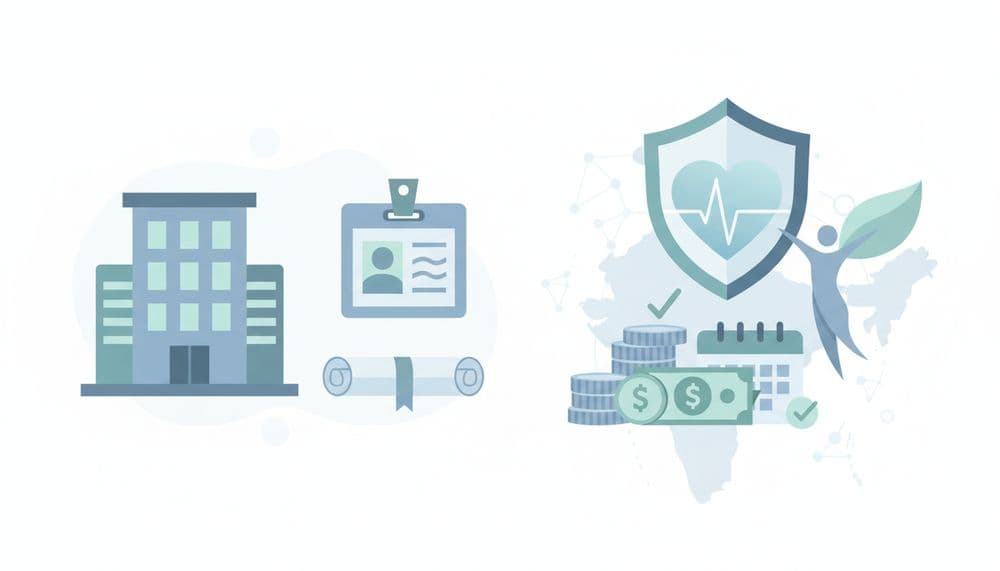
More in Health Insurance Guides
- Health Insurance Claims and Portability in India
- Health Insurance for Senior Citizens in India: A 2026 Guide
- Health Insurance for Above 70 Years in India: A Guide
- Health Insurance for Parents Above 75 Years in India: A Guide
- Medical Insurance Premium for Senior Citizens: A Calculation Guide
- Pre-Existing Disease Waiting Period in Health Insurance: India Guide
Medically reviewed by Dr. Nikhil Singh, Anaesthesia, MBBS, MD
Last reviewed: 29 Aug 2026 · How we review health content
Employer group cover is the reason many salaried Indians never buy a policy of their own, and it is also the reason a lot of families are underinsured without knowing it. Group sums insured are modest, room-rent and co-payment clauses are common, adding parents is often expensive, and the whole arrangement ends on your last working day.
These guides cover what group cover typically leaves exposed, how ESIC sits alongside it for employees under the wage ceiling, and why buying a personal policy while you are young preserves waiting-period credit that employment-linked cover never accrues for you.
Guides for salaried employees
Group cover gaps, ESIC mechanics, tax treatment and job changes:
Related hubs
This pillar sits inside our wider India health insurance and cost coverage:
- Health insurance in India: the complete guide
- Government health schemes in India
- Treatment costs in India: a complete guide
Disclaimer
This article is for general informational purposes and is not insurance, tax or medical advice. Insurance regulations, premium rates and scheme entitlements change; verify the current position with the regulator or the scheme portal before acting. Please consult a qualified healthcare provider for medical decisions and a licensed adviser for financial ones.
Frequently Asked Questions
Is my employer health insurance enough?
It is rarely sufficient on its own. Group policies typically carry a modest sum insured, often cap room rent or impose a co-payment, and cover ends when employment does — usually at the age when replacing it is most expensive. Our guide sets out the specific gaps to check in your own policy document.
What happens to my health insurance when I leave a job?
Group cover generally ends with employment. IRDAI rules provide a route to move from group to individual cover, which matters because it can preserve continuity rather than restarting waiting periods. Acting before the cover lapses is what makes the difference.
What is the difference between ESIC and employer health insurance?
ESIC is a statutory scheme funded by employee and employer contributions and applies below a defined monthly wage ceiling, delivering care largely through its own hospitals and dispensaries. Employer group insurance is a commercial policy the employer buys. An employee can be within scope of both, and our guide covers how they interact.
Related
- Health insurance in India: the complete guide
- Government health schemes in India
Medical Disclaimer
The information provided in this article is for general informational and educational purposes only. It is not intended as a substitute for professional medical advice, diagnosis, or treatment. Always seek the advice of your physician or other qualified healthcare provider with any questions you may have regarding a medical condition. Never disregard professional medical advice or delay in seeking it because of something you have read in this article.
Related guides
- Co-payment in Health Insurance: Room Rent Limits & Sub-limits Explained
- Does Health Insurance Cover Cataract Surgery? Cashless Claim Guide
- Government Health Schemes vs Private Insurance in India
- Health Insurance for NRIs and Their Families in India
- A Guide to Health Insurance for NRIs & OCIs Visiting India
- Health Insurance for Parents Above 75 Years in India: A Guide
- Health Insurance Portability in India: How to Switch Insurers Without Losing Benefits
- NRI Guide: Health Insurance for Parents in India
- Senior Citizen Health Insurance in India: Ages 60, 70 and 75+
- NRI Guide: Buying Health Insurance for Parents in India
- Cashless vs Reimbursement Claim in Health Insurance: A Guide
- Cataract Surgery Insurance Claim Rejected: Reasons & Next Steps
Have More Questions?
Find quick answers to common questions about our services, appointments, and patient care.
It is rarely sufficient on its own. Group policies typically carry a modest sum insured, often cap room rent or impose a co-payment, and cover ends when employment does — usually at the age when replacing it is most expensive. Our guide sets out the specific gaps to check in your own policy document.
Group cover generally ends with employment. IRDAI rules provide a route to move from group to individual cover, which matters because it can preserve continuity rather than restarting waiting periods. Acting before the cover lapses is what makes the difference.
ESIC is a statutory scheme funded by employee and employer contributions and applies below a defined monthly wage ceiling, delivering care largely through its own hospitals and dispensaries. Employer group insurance is a commercial policy the employer buys. An employee can be within scope of both, and our guide covers how they interact.

Written by Dr. Nikhil Singh · Anaesthesia, MBBS, MD
Private hospitals in Gorakhpur on Zospital
Prefer a private option? These hospitals in Gorakhpur list their doctors and take bookings.
- Aastha Hospital & IVF Center, Gorakhpur
- Shankar Eye and Maternity Clinic- Best eye hospital | Best eye surgeon | Eye and Maternity clinic in Gorakhpur
- Trimurti Hospital - Dr. Sanjeev kumar Singh
Related Articles

Health Insurance Claims and Portability in India
The claim stage explained — cashless versus reimbursement mechanics, IRDAI settlement timelines, rejection grounds and the appeal route, and portability credit rules.

Health Insurance for Senior Citizens in India: A 2026 Guide
A comprehensive guide to health insurance for senior citizens in India, covering new IRDAI rules from 2024, premium estimates for ages 60+, tax benefits under Section 80D, and the free Ayushman Bharat scheme for those over 70.

Health Insurance for Above 70 Years in India: A Guide
A comprehensive guide for Indian citizens on the available health insurance for above 70 years in India, including the universal Ayushman Bharat entitlement and the rules for purchasing new private medical insurance policies.

Written by Dr. Nikhil Singh
Anaesthesia, MBBS, MD
Last reviewed: 29 August 2026
Medical Disclaimer
The content provided on Zospital is for general informational and educational purposes only. It is not intended as a substitute for professional medical advice, diagnosis, or treatment. Always seek the advice of your physician or other qualified healthcare provider with any questions you may have regarding a medical condition. Never disregard professional medical advice or delay in seeking it because of something you have read on this website. If you think you may have a medical emergency, call your doctor or emergency services immediately.
Are you a doctor or run a clinic or hospital?
Patients across India are searching Zospital right now. Get a free profile with reviews, timings and direct WhatsApp bookings.